Last Update:
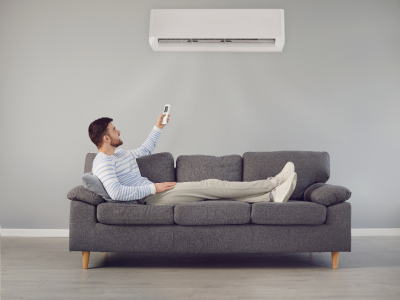
If your air conditioner is blowing warm air, the most common causes are restricted airflow from dirty air filters, low refrigerant levels due to a leak, or a tripped safety switch. In coastal areas, salt-air corrosion on the condenser coils often causes the system to overheat, leading to a faulty compressor if not addressed through regular maintenance.
Living on the Mornington Peninsula or along the Bayside stretch means your air conditioner has to fight the elements just as much as the heat. When a system stops cooling, it’s rarely a simple fix. The heavy salt spray combined with these humidity spikes creates a level of stress that inland systems just don't see.
Whether it’s a split system in Mt Martha or ducted cooling in Brighton, coastal units are at high risk of ‘invisible’ corrosion. It’ll choke your efficiency or, worse, trigger a total breakdown right when a 38°C Melbourne northerly hits!
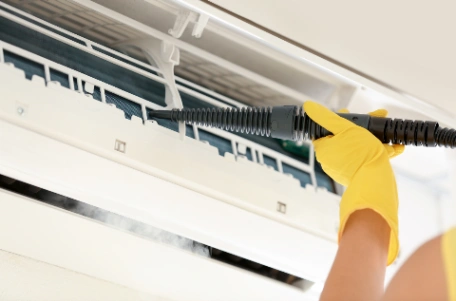
The Quick Fix Checklist: 4 Steps Before You Call a Tech
If your aircon is blowing lukewarm air, there's a good chance it's just a simple environmental blockage. Before you spend money on a service call, run through these four quick fixes.
The Light Test for Filters
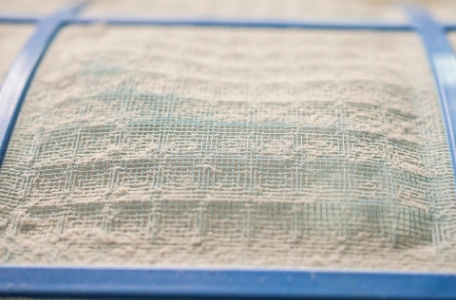
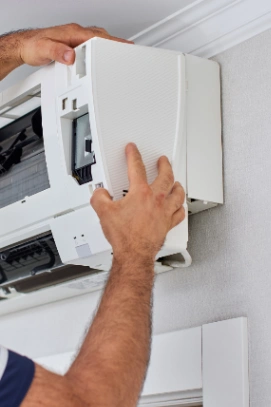
Dust and humidity create a sticky film on your filters that a quick vacuum usually won't shift. Slide them out and hold them up to the light; if you can’t see through the mesh, your AC is literally choking for air.
➡️ Give them a wash in lukewarm water and make sure they’re completely dry before you put them back in.
The Hard Reset
Modern air con units are basically computers with fans. They can ‘ghost’ or freeze up after a power surge or a particularly humid day.
➡️ Head to your outdoor unit and find the isolation switch (the big on/off dial). Turn it off, wait 60 seconds, and flick it back on.
This clears the logic board and often gets the compressor kicking again.
The 60cm Clearance Rule
Your outdoor unit needs to ‘exhale’ heat to work. If it’s crowded by garden tools, overgrown shrubs, or storage boxes, it’s going to overheat. When the unit can't dump that hot air, it ‘short-cycles’, which is basically shutting itself down to stop the motor from melting.
➡️ Clear a 60cm radius around the unit so it can breathe.
It’s one of the easiest ways to drop your energy bills and stop the system from cutting out on a 35°C day.
The Coil Rinse
If you live near the coast or a busy road, grime and salt build up on the metal fins of your outdoor unit. It basically creates a thermal blanket that traps heat inside.
➡️ Grab a garden hose and give the fins a gentle rinse; just a light shower. *Never* use a pressure washer, or you’ll flatten the delicate fins and ruin the unit.
Washing away that buildup can drop the system’s temp enough to bring the cold air back instantly.
Salt-Air Corrosion: The Silent Efficiency Killer
Living near the coast means your aircon is under constant attack, even when it’s switched off. Salt air corrosion is the #1 reason systems fail.
It’s a silent killer because the real damage happens deep inside the outdoor unit and you usually don't even know it's happening until the cooling just stops.
The Thermal Blanket Effect
Salt doesn't just sit on the surface; it bonds to the aluminium condenser fins. This creates an insulating crust that prevents the unit from dumping heat. Your system has to run twice as hard to achieve the same cooling, which spikes your energy bills and wears out the compressor years before its time.
The ‘Tea-Staining’ Warning
Have you noticed brownish, rust-like spots on the outer casing or brackets? In the trade, we call this ‘tea-staining’. It’s a massive red flag. If the stainless steel on the outside is pitting, the delicate copper and aluminium internals are likely already brittle.
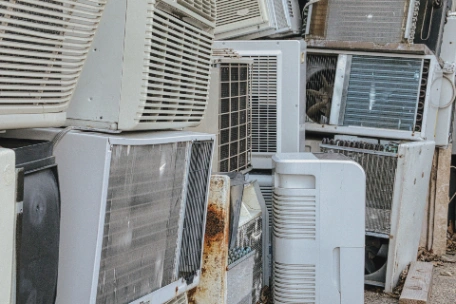
Refrigerant Leaks & Formicary Corrosion
If your aircon is running but blowing room-temperature air, most people assume it just needs a regas. But here’s the reality: refrigerant doesn’t just evaporate. If it’s low, you have a leak. That leak is usually caused by something we call 'formicary corrosion'.
The ‘Ant Nest’ Effect
This is the stealth version of salt damage. The reaction between salt, moisture, and copper creates microscopic, ant-nest-like tunnels in the coils. If your AC is running but blowing room-temperature air, it’s not ‘out of gas'; it has a leak caused by the ocean air. A regas is just a Band-Aid; if the coils are corroded, they eventually need a specialist's touch or a full replacement.
Why a ReGas is a Band-Aid
Adding more gas to a leaking system is like trying to inflate a tyre with a nail in it. It might get you through a weekend heatwave, but you’re literally blowing money into the atmosphere. If the coils are pitted with corrosion, they eventually need a specialist’s touch or, in worst case scenarios, a full replacement.
The Hissing Warning
In some cases, you might actually hear a faint hissing sound coming from the indoor or outdoor unit. If you hear that, or if you see oily patches on the copper pipes, turn the system off. That oil is a sign that the refrigerant is escaping, and running the unit dry will eventually burn out the compressor.
Electrical Failure in High Humidity Zones
It’s not just the metal that suffers near the coast; it’s the electronics. Salt-laden humidity is highly conductive, and it has a way of creeping into the outdoor control boards that inland units just don't deal with. This leads to what we call ‘track firing', where moisture and salt create a bridge for electricity to jump across the board, frying sensors or blowing capacitors.
The Clicking Startup
If you hear your AC making a loud click or a humming sound but the fan won't spin, you likely have a blown capacitor. In high humidity zones, these components are under constant thermal stress.
While it’s a relatively simple part to replace, trying to force the unit to start by repeatedly flicking the thermostat can eventually burn out the much more expensive fan motor.
Safety Switch Tripping
If your aircon is tripping the safety switch (RCD) every time it tries to kick in, stop resetting the breaker. This is usually a sign of a moisture-induced short or a grounded compressor. Continuing to flip the switch back on isn't just bad for the unit; it's an electrical hazard.
The Ghost in the Machine
High humidity can also mess with the communication between your indoor and outdoor units. If your system is throwing strange error codes or the display is flickering, it’s often due to salt corrosion on the terminal blocks.
Maintenance Schedule: The 6-Month Rule
If you live within 5km of the ocean, a once-a-year service isn't enough. By the time 12 months have passed, salt air corrosion has already moved from the surface into the sensitive copper internals. To keep your warranty valid and your power bills down, follow this maintenance routine.
Monthly: The Homeowner Quick Wash
The Filter Rinse: Slide out your indoor filters and wash them in lukewarm water. In humid coastal zones, dust turns into a sticky paste that a vacuum just can’t shift.
The Outdoor Hose-Down: Grab your garden hose and give the outdoor unit a low pressure rinse. Focus on those metal fins. This simple 2 minute job washes away salt crystals before they have a chance to bond to the aluminium.
Every 6 Months: The Professional Health Check
This is where you bring in a pro to deal with the actual chemistry of the salt air. A standard maintenance service needs to go beyond just looking at it; it should include:
Chemical Coil Flush: We use a specialised alkaline wash to neutralise the salt acidity. It’s the only way to deep clean those 'ant nest' gaps between the fins that a garden hose just can’t shift.
Electrical Sealant Check: We reapply a non-conductive silicone spray to your control boards. This stops track firing (where salt-laden humidity lets electricity jump across the board) before it fries your sensors.
Refrigerant Pressure Test: This is for catching those microscopic stealth leaks. They usually go completely unnoticed until the compressor finally burns out from running dry.
Every 2 Years: The Deep Hydro Clean
Over time, mould and bacteria love to grow in the damp, salty environment inside your indoor unit. A full hydro clean involves bagging the head and pressure washing the internal barrel fan and the drainage tray. This doesn't just help the aircon run better; it stops that musty smell from blowing through your living room every time you turn it on.
☝ Coastal Maintenance Fact:
We’re finding that preventative maintenance is no longer just a luxury. With the rising humidity levels we're seeing across the coast, a standard service now includes an anti-corrosive coil wash and a control board sealant.
These two steps alone are adding an average of 4 years to the lifespan of coastal units. If your system hasn't been weatherproofed in the last 12 months, it's essentially sitting unprotected in the salt air.
⚠️ Coastal Warranty Alert:
In 2026, we are seeing more manufacturers reject ‘corrosion-based’ insurance claims if the homeowner cannot produce a service log showing a professional coil clean within the last 12 months.
Keeping a simple folder of your service receipts is the best way to ensure that if a major component fails, you aren't stuck with the full $5,000 replacement bill yourself!
When to Stop DIY & Call a Professional
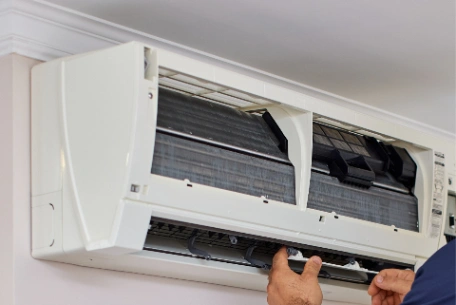
If you’ve washed the filters, cleared the garden debris, and tried a hard reset, but the air is still warm, you’ve hit the limit of what’s safe to do yourself. If you notice any of these three red flags, turn the power off at the wall and give us a call:
‼️The Hissing Sound: This isn't just air moving; it's a refrigerant leak. No amount of cleaning will fix a physical hole in the copper line.
‼️The Burning Smell: If you smell hot plastic or ozone, you have a serious electrical failure. Continuing to run the unit is a fire risk.
‼️The Immediate Trip: If the safety switch (RCD) trips the second the compressor tries to kick in, the motor is likely grounded. Trying to force it to start will fry the entire control system.
Summary: Common Reasons Your Unit Isn't Cooling
From Dirty Air Filters to Electrical Issues & Low Refrigerant Levels
If your system is blowing warm air instead of cool air, there are several possible reasons. From refrigerant issues in the condenser unit to electrical faults on the board, most problems start with restricted airflow.
Don't wait for a faulty compressor or a frozen evaporator coil. Check your thermostat settings and ensure proper airflow through your indoor vents, but remember: regular maintenance is the only way to stop salt from eating your condenser coils.
Call our friendly Coastal Air Heating & Cooling to book your regular servicing on 0440 133 039 or complete our enquiry form today!
Resourses:
Fujitsu - Why is My Air Conditioning Unit Not Cooling?
Carrier - Why is My AC Not Blowing Cold Air While Running?
Daikin - Air Conditioner Not Cooling Housw: Reasons & Solutions
Actron Air - Why Isn't My Air Conditioning Functioning Properly?
Hitachi - 6 Common Air Conditioner Problems & How to Fix Them
TCL - Why is My AC Not Blowing Cold Air? Easy Fix